


;Resize,width=570;)
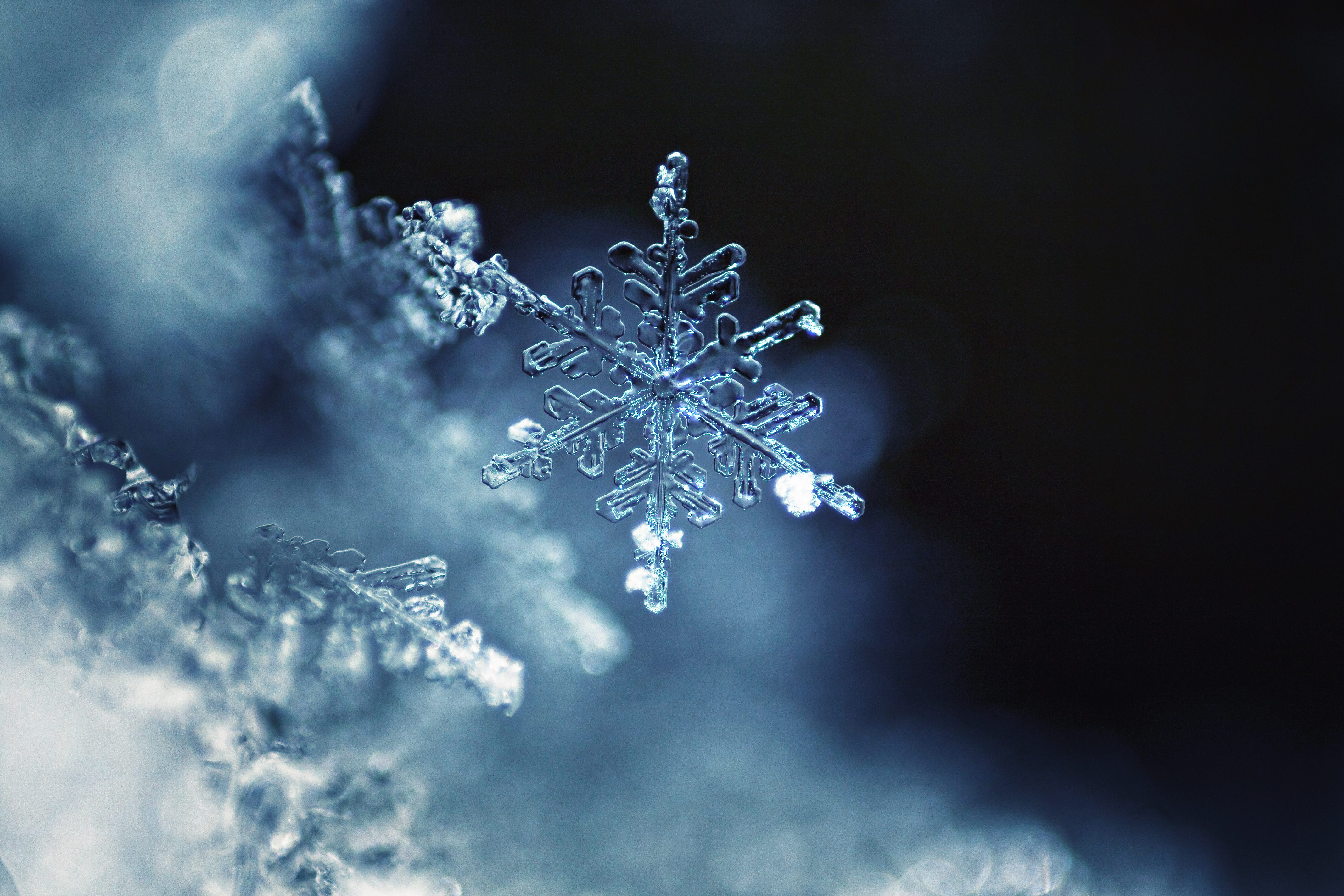
If we were to put some snow under the microscope and analyze the individual crystals, we would see that despite some similarities – e.g. hexagonal structure due to the properties of water and the physical and chemical laws of crystallization – they all have different geometric shapes. But exactly how many are there and how are they classified?
Crystal shape: effect of temperature and humidity
In addition to the chemical composition of water, other variables affect the shape of the snow crystal: we analyze here temperature and humidity of air in which the flake is formed.
At 0 °C, snowflakes have simpler shapes, and as the ambient temperature drops, they become more and more complex. If the temperature drops to -5 °C, the crystals take on the shapes of the long needles while at –15 °C a flat shape prevails six-pointed star. At even lower temperatures, the snow crystals become similar instead of long columns.
L’humidity it affects the number of branches that we can observe in snow crystals: the higher the humidity, the larger the branches. This involves more complex and sometimes aesthetically fascinating geometry.

How many categories can snowflakes be classified into?
Since the shape of a single snow crystal depends on many factors (temperature and humidity, but also pressure and the number of suspended particles), each crystal has its history and is different from the others. That’s why we can meet when it snows many different types of snowflakes.
The number of categories into which snowflakes can be placed has steadily increased over the years. In early studies in the 1930s, snow crystals were classified into 21 different categories based on shape; in the 1950s the classification was expanded to 42 categories, in the 1960s to 80 categories, and again in 2013 to 121 categories.
The second study, in turn, divides the classification into three sub-levels: General, Intermediate, and basic. The chart below was created by Compound Chemistry Blog shows 39 middle categories which in turn can be grouped into 8 general categorizations.

Go into the details for a moment and choose the most important types we can mention the following:
- Dental flakes, or classic snow crystals that we see during snowfall even at low altitudes. Size depends on humidity and temperature levels: if these two atmospheric agents are high, the flakes will be larger; however, they are smaller at low temperatures and humidity.
- Rosette bows a classic ice core from which conical crystals branch randomly.
- Graupel: grains that are spherical or conical in shape, between 2 and 5 millimeters in size, white and opaque, bounce and break when they reach the ground.
- Sleet: they fall in small quantities and are flakes of small diameter (less than one mm); unlike round snow, it does not break when it falls to the ground. It is the proverbial snow that “attacks”.
- Double-layer flakes: are the result of the connection between a sleet flake and a round snow flake, forming a two-layer flake.
- Granola: forms transparent and translucent ice granules, has a spherical shape, and reaches a diameter of 5 mm.
- Triangular flakes: it is the rarest type, they are formed at a temperature of two degrees below zero.
- Needle flakes: generally fall at high altitudes with very cold temperatures, especially during snowstorms. They are short and can be solid or hollow inside.
- Artificial snow: invented by Vincent Schaefer, was first used in 1952 in Massachusetts. With this method, the natural phenomenon of snow is recreated through snow cannons, by freezing and then crystallization of water.

